Find out what is happening
Check the address settings, where visitors are sent and the secure connection for one website.
 Andreacchi Digital
Fix Website Address Problems · Toronto & across Canada
Does one version of your website address work while another shows an error or “not secure” warning? I’ll investigate the address and connection settings, agree on up to two corrections and check the result.
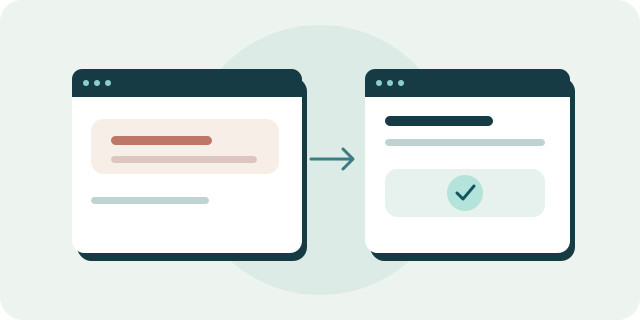
The idea, illustrated
Find the cause, agree the work, then check the result.
Is this right for you?
Examples include an old address that no longer sends people to your site, a www address that behaves differently, or a visible security warning. I’ll confirm what can be corrected with the accounts and access available.
Website offline after a failed update? Website Rescue may be the right next step.
What the price includes
Check the address settings, where visitors are sent and the secure connection for one website.
Work out which accounts or companies control the website address, its settings and the website itself.
Explain the changes, their expected effect and the access needed before changing the live settings.
Apply the agreed corrections where access allows, check the public addresses and explain anything still waiting on another provider.
Prices are in Canadian dollars. Any taxes, subscriptions or other company’s fees are confirmed before payment. Extra work needs your agreement.
How it works
Tell me which address fails and what message customers see. A screenshot can help.
I identify the companies and settings involved before proposing a change.
We confirm up to two corrections and any possible effect on other services.
I check the result and record any changes still taking time to appear across the internet.
I first check the cause and whether it fits the service. Some problems need hosting-company help, account access or separately quoted work.
No. You approve and pay any website address, hosting, security certificate or other company’s charges separately.
Email setup and moving mailboxes are not included. I check for settings that could affect email before making agreed website changes.
Internet providers can temporarily keep old address information. I’ll explain what has been changed and what is still waiting to appear everywhere.
Start with a short message
Tell me what is happening and the result you want. I’ll reply by email with the next step. Enquiries welcome 24/7. I’ll reply personally as soon as I can. Please leave out passwords.